


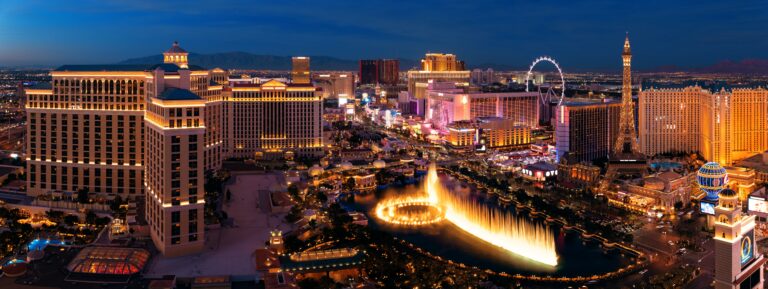
With know before you go remaining a key mantra in managing travel risk, for the upcoming NBAA BACE convention in Las Vegas, here is a quick traveler security and safety briefing.
ASTORISK rates Las Vegas overall as a Threat Level 1 (Low) risk to travelers. As a unique and major tourist hub, this amplifies specific vulnerabilities within such — not through any significant threat, but through the concentration of wealth, alcohol, distraction, and opportunistic criminality that surrounds much of the city’s commercial model of business and tourism.
Las Vegas’s risk profile for travelers is narrow but consistent: you are almost certainly safe in managed, surveilled resort space, yet importantly travelers are more vulnerable in the gaps between those spaces, particularly at night. The city’s security infrastructure is substantial; the windows outside it are brief and predictable — which makes them avoidable with modest preparation.
Las Vegas presents an elevated street crime environment relative to other major U.S. cities, with the casino corridor benefiting from concentrated private security infrastructure while surrounding areas carry higher risk. Demonstrations and protests do occasionally occur within the city but are typically not a major concern. The threat of terrorism is present due to the city’s status as a major tourist destination.
Las Vegas Metropolitan Police Department (LVMPD) logged over 100,000 Part 1 crimes across Clark County in the most recent annual reporting period. Theft and robbery account for the dominant share, with the highest density along the resort corridor between Mandalay Bay and the Venetian. The Design District and Arts District, increasingly popular with corporate visitors seeking off-Strip dining, carry a materially different street-level risk profile than the casino floor.
After midnight, the transition from hotel property to public sidewalk on Las Vegas Boulevard represents the most consistent personal security exposure point — the moment a traveler moves from relatively secured spaces onto a (at times) poorly lit public thoroughfare where opportunistic crime concentrates. Resort hotel rooms are statistically among the safest places in the city; vehicles and pedestrian transition zones are not.
Be aware that rideshare fraud, including staged pickup scams targeting intoxicated visitors outside club venues, has been documented by LVMPD as a recurring pattern.
Traveler Tips
-
- Keep valuables in the hotel safe, not a resort bag carried to pool areas or casino floors.
- Flag any room-access anomalies — unfamiliar staff requests, door-mechanism irregularities — to hotel security immediately rather than resolving them yourself.
- Verify your rideshare plate and driver name before entering any vehicle — confirm the booking is yours, not one initiated on your behalf by a third party and confirm all details before entering the vehicle.
- For travel on the Strip, taxis and ride shares can only pick up or drop off at defined locations, typically major hotels or facilities, rather than off the street.
- If your itinerary includes off-Strip venues, consider pre-arranging a vetted car service rather than relying on street hails or app pickups from venue exits depending on your travel needs.
Las Vegas remains one of the premier cities for conventions and is a fantastic place to network across a wide range of entertainment and cuisine options. A little caution and planning will ensure a great experience for the 2026 BACE Convention attendees and exhibitors.
Team leaders from GGT WORLDWISE and ASTORISK will be attending BACE 2026. Reach out to us to connect while you’re there at: gsoc@astorisk.com.