


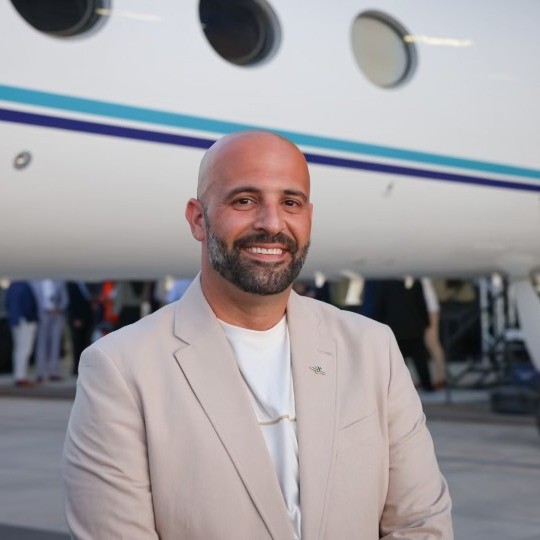
In recognition of Autism Awareness Month, BAI speaks with Antonio Ferrara, executive director of Aviators for Autism, about the organization’s mission to create inclusive opportunities in aviation for individuals on the autism spectrum and their families.
Can you give an overview of Aviators for Autism and its mission?
I’ve been involved in aviation my whole life. My father has been an American Airlines pilot for 39 years, so I’ve grown up around aviation and worked in the general aviation space for about 15 years across different sectors.
More importantly, I’m father to a nine-year-old non-speaking autistic boy named Nicholas. Like me, he was exposed to aviation early, and we’ve been able to travel everywhere with him. He loves to travel, but that’s not a reality for many families. A 2019 study found that 87% of families with a loved one on the spectrum don’t plan family vacations. That’s millions of families not flying or experiencing things together.
I’ve also noticed that the aviation industry is facing a workforce shortage, while over 80% of individuals on the spectrum with a high school or college degree are unemployed or underemployed. So I’ve see an opportunity to connect these two communities.
Our mission is to expose, educate and empower the autism community and their families in and through aviation. We do this through exposure events and giving families the tools and confidence they need.
What steps can the business aviation sector take to improve inclusion?
What’s unique about business aviation is that we have a lot of small, structured corporate offices. The nature of Part 135 operators, Part 91 operators, and Part 145 repair stations offers structured environments that can work well for neurodiverse individuals.
I’m not suggesting putting a non-speaking person in a client-facing position, but there are many roles where neurodivergent individuals can thrive – accounting, data analysis, engineering. It’s about identifying skillsets that match needs.
One of the biggest complaints in aviation management is procedure adherence. When incidents or accidents happen, it’s often because someone didn’t follow procedure. Give someone on the spectrum a standard operating procedure, and they’ll follow it religiously. That’s a huge win for safety.
For many neurodiverse individuals, having structure is key. If you build them a workflow – from this time to this time, work on this task, then this task – they’ll work exactly how you need them to.
Do you think specific training programs need to be developed for employers?
Yes, that’s something we think about a lot. We’re speaking with numerous companies about creating dialogs and working with US teams to develop training programs.
It’s part of our two-to-three-year plan to have a comprehensive program where we can approach operators and say, “Let’s identify what you need, put you on a path to identify candidates, and set them up for success.” I don’t want someone to hire a neurodiverse employee and then fire them two months later because they didn’t provide proper support.
The workplace culture is important too. Business aviation can have some unique dynamics that need to be addressed, but with the right preparation, you can create an inclusive environment where everyone thrives.
Why is this important for the industry?
It solves the problem of workforce retention, which business aviation has struggled with for years. The industry could be missing out on fantastic employees who can bring tremendous value but aren’t being included because the infrastructure isn’t there yet.
Think about large aviation companies working with schools for developmentally disabled and gifted individuals, identifying talented people at a younger age, bringing them in for tours, and building passion. Suddenly, we could have brilliant minds working in training, engineering, or manufacturing.
It’s like the saying: “You can’t be what you can’t see.” People can’t dream of going into business aviation if they don’t see people like themselves in it.
What kinds of events and programs are you currently running?
Right now, we offer personalized airport tours. At my 135 operator, I tell anyone to reach out if they want to tour the airport. I can spend 40 minutes walking a family around, showing them a Gulfstream, and answering their questions.
Starting in May, we’re working with Long Island MacArthur Airport (ISP) to offer more structured tours. Families will be able to go through TSA into the airport without a ticket, see the Southwest operations room, and even go onto the tarmac. This is significant because normally you need to buy a ticket and call TSA Cares 72 hours in advance to get that kind of access.
We’re starting with ISP, and the plan is to roll out to other small regional airports, then eventually the larger ones. In the UK, if someone with autism goes to the airport and requests an escort, they get one – that doesn’t happen automatically in America. We’re looking at ways to partner with wheelchair service companies to train them to assist neurodiverse travelers.
How can industry professionals and organizations support your mission?
There are many ways to help. If you work at a Part 135, 91, or 145 facility, you can get educated about autism and host exposure events for families. Let them see the planes and learn about aviation careers.
Diversity, Equity, and Inclusion initiatives work best when they’re organic – when we introduce children to possibilities early and let passion develop naturally. So, helping with exposure events around the country or even worldwide is invaluable.
For larger carriers, continuing to break down barriers that prevent families from traveling is critical. Some airlines like Emirates are getting autism certification. Aircraft manufacturers and airlines could also consider interior designs with better lighting and materials that reduce sensory stress.
The industry is a spectrum, just like autism spectrum disorder. There are hundreds of jobs from the ground to 40,000 feet making everything work, which means countless opportunities for inclusion.
What does the future hold for Aviators for Autism?
We’re looking for strategic partnerships to help us grow. The industry is changing, with developments in advanced air mobility, eVTOL, and unmanned flight. Just imagine a neurodiverse individual with a good IQ who may lack some soft skills but would be great at operating an unmanned aircraft – there are so many possibilities.
If anyone has lived experiences or ideas or is passionate about supporting us, please reach out. This nonprofit doesn’t belong to me – it was started for a purpose and we value everyone’s feedback.
I’d also like to mention that three months ago, I started a WhatsApp group for autism and special needs dads. We now have about 56 dads from all over the world – the UK, Mexico, across the USA. There’s a lot of support geared toward caregivers and moms, but sometimes dads aren’t considered. Most men struggle in silence anyway, and that’s exacerbated when you have a special needs child. Anyone interested in joining this community is welcome to reach out.