

In the busy world of global business aviation, the London market is a paradox. On the one hand, the city is one of the most desired business destinations on the planet. On the other, its primary aviation gateways are frequently choked by commercial traffic, rigid slot constraints, and the geographical sprawl of the South East.
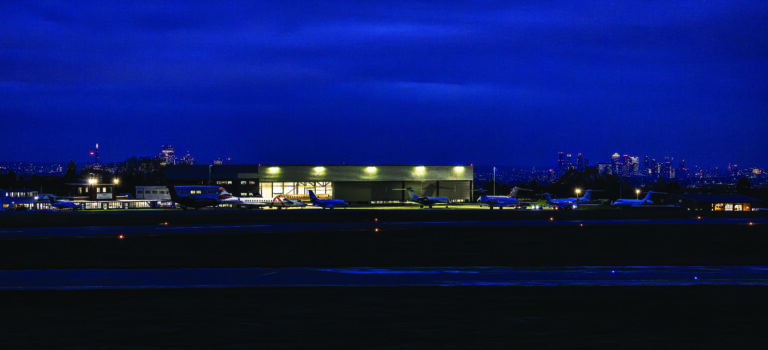
Amidst this congestion, London Biggin Hill Airport (BQH) has carved out a niche as a one-stop shop for business travelers. Located just 12 miles from the City of London, BQH is no longer just an RAF fighter base famous for its role in the Battle of Britain. Instead, it is a highly efficient, discreet, and well-equipped modern gateway for corporate travel.
A storied history
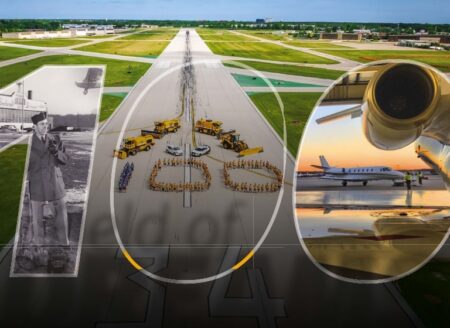
The site of London Biggin Hill, one of the highest points in Kent at 600ft above sea level, was requisitioned by the War Office in 1916. Its initial mission was as a Royal Flying Corps (RFC) camp to conduct wireless communication experiments. On January 2, 1917, Lieutenant Dickie and Air Mechanic Chadwick became the first people to officially land at Biggin Hill, touching down in thick snow. By December of that same year, Biggin Hill officially became an operational fighter station, tasked with defending London against German Zeppelin and Gotha bomber attacks.
Between the wars, Biggin Hill was an experimental hub for early radar and sound-location devices. In 1936, it was designated as the main fighter station in C Sector of 11 Group under Fighter Command. During the Battle of Britain in 1940, Biggin Hill’s RAF fighters played a vital role in defending London and the South East. By war’s end, these crews successfully downed 1,400 enemy aircraft, at the cost of 453 Biggin Hill-based aircrew lives.
Biggin Hill became a joint military/civilian airport in 1959, a non-fighter station in 1962, and a civilian-only airport in 1992 when the RAF left. In 1994, Andrew Walters of Regional Airports Limited signed a 125-year lease to take over Biggin Hill, to transform it into a dedicated business aviation reliever airport.
Since that time, the company has modernized and expanded what is now known as London Biggin Hill Airport, investing heavily in MRO (Maintenance, Repair, and Overhaul) facilities and attracting giants like Bombardier to set up European service centers. Now operating as a European business hub with 125,000 permitted movements annually with a fast Heli-Shuttle to Central London, BQH is planning to support commercial eVTOL operations in 2029.
The quickest touchdown to downtown
Today, London Biggin Hill’s value proposition is built on three pillars: speed, accessibility, and autonomy. Unlike Heathrow or Gatwick, BQH operates without runway slot restrictions. This allows business operators to accommodate last-minute schedule changes, which is a critical requirement for the corporate sector.
Meanwhile, Biggin Hill has complete autonomous control over its own daily operations and workforce, without relying on third-party contractors. In situations such as Covid-19, this autonomy allowed the airport to unilaterally decide to stay open, at a time when other airports were shutting down and cutting off travel.
BQH’s standout feature is its helicopter transfer service. While other London airports contend with heavy traffic on the M25 or rail delays, this service allows clients to get to the capital in mere minutes. “We are only six minutes to Central London’s Battersea Heliport, which is unrivaled,” says Robert Walters, BQH’s commercial director. “You can’t do that from any other airport because helicopters can’t fly into London City. So, in terms of timing, we are the quickest from touchdown to downtown, as we call it,” he says.
Capacity is another Biggin Hill differentiator. The airport is permitted to handle 125,000 movements per year yet currently handles just under 40,000 in this time frame. This headroom ensures that business jets aren’t jockeying with each other for runway time.
Built for the biggest business jets
To serve the largest business jets in production, including the Boeing Business Jet (BBJ), Airbus Corporate Jet (ACJ), and the Bombardier Global 8000, Biggin Hill has invested heavily in its 5,925ft asphalt runway.
“We’ve completely resurfaced our runway, which is fully grooved,” says Walters. “We’ve put in a whole new lighting system, all new LED lighting, including for the first time ever, centerline lighting, which gives much better situational awareness for pilots at night or in inclement weather. It reduces our RVR [runway visual range] capability, so you can take off in lower visibility.”

Biggin Hill has also modernized its weather and visibility tracking systems, moving away from manual observations. “In the past, we had people standing on a fire truck looking down the runway, it was very primitive,” says Walters.
“We’ve since put in new IRVR [instrument runway visual range systems], so that we have constant runway visual range readings, 24 hours a day.”
This IRVR data is particularly useful for USA-based operators making the overnight hop across the Atlantic. “You are now not surprised by what weather you find when you come onto the approach at quarter past six in the morning, because you’ve had the weather the whole way through the night,” Walters says. “And if you are a US operator landing into London in the summertime, we are the only airport where you can land freely between 0630 and 0700 in the morning with no slots.”

The reliever airport philosophy
A major part of Biggin Hill’s strategic DNA comes from across America. In 2013, BQH established a sister-airport relationship with Teterboro in New Jersey to study the American reliever airport concept. This is a model where secondary airports are specifically zoned to handle business traffic and relieve pressure on major hubs.
By twinning with Teterboro, Biggin Hill proved to the British government that specialized airports could provide better service than a one-size-fits-all commercial hub. “It was only by chance that Biggin Hill and Farnborough decided independently that this is what we wanted to do,” says Walters. “The results speak for themselves. Our success and Farnborough’s is what we refer to as ‘the rise of the dedicated business aviation airports’.”
The VIP experience
London Biggin Hill Airport offers travelers two distinct FBO choices: BQH’s own Biggin Hill Executive Handling and the recently opened Jetex London. Both provide the level of seamless transitions that corporate users demand, including direct ramp access for vehicles and luxury amenities.

“Our FBO, Biggin Hill Executive Handling, has been functioning for 32 years,” says Walters. “We have extensive experience in operating FBOs and serving customers. Our building, which is located underneath our control tower, has a number of lounges that have all been renovated in the last 18 months. We even have the world’s first luxury vending machine in the foyer selling caviar and champagne for those who’ve forgotten to bring a gift.”
The FBOs are also equipped for large-scale operations, such as moving professional sports teams or Formula 1 personnel. “We have a lounge for up to a hundred passengers to facilitate big group travel for football teams and other large groups,” says Walters.
“We’re very used to doing that, being the home of Formula One who had their TV headquarters at Biggin Hill. We’ve been doing that since 1996.”
Beyond business passenger handling, BQH serves as a major maintenance hub that is anchored by Bombardier’s massive 250,000 square foot European Service Centre.
This facility offers complete tip-to-tail heavy maintenance, interior refurbishments, and avionics installations for Learjet, Challenger, and Global aircraft. Its hangar is large enough to hold up to 14 ultra-long-range jets simultaneously.
The engineering gap
Despite its decades of success, BQH is facing the same workforce gap that is confronting the entire aviation industry. According to Walters, the ongoing shortage of engineers and pilots is a primary concern for the airport’s long-term growth.
“If we can attract local people to go to school locally, train locally and get a job locally, that’s the best glue we could possibly have,” says Walters. “And if we can have not one, but two or three generations of the same family working on the airport, that is a big win for us and a big win for the community.”
Looking ahead, Biggin Hill is keen to support eVTOL aircraft, which Walters sees as the next seismic shift in urban connectivity.
“The CAA has a defined timeline for the certification in the UK by the end of 2028,” he says. “If that’s stuck to, then we should expect to see electric vertical takeoff and landing here in 2029 on a commercial basis in some form. We’re pretty excited by that. It’s been a long time coming, but certainly it will come.”
With new GPS approaches, expanded hangarage, and even a potential new FBO terminal in the works, Biggin Hill is determined to stay ahead of the curve. Yet, when it comes to wooing business travelers, Walters’ message is one of streamlined simplicity.
“Ultimately that’s what the business aviation user wants: no slots, as limited restrictions as possible, just keep it as simple as possible,” he concludes. “We provide all of this, which ultimately just makes Biggin Hill a much easier, better, and safer place to do business.”