

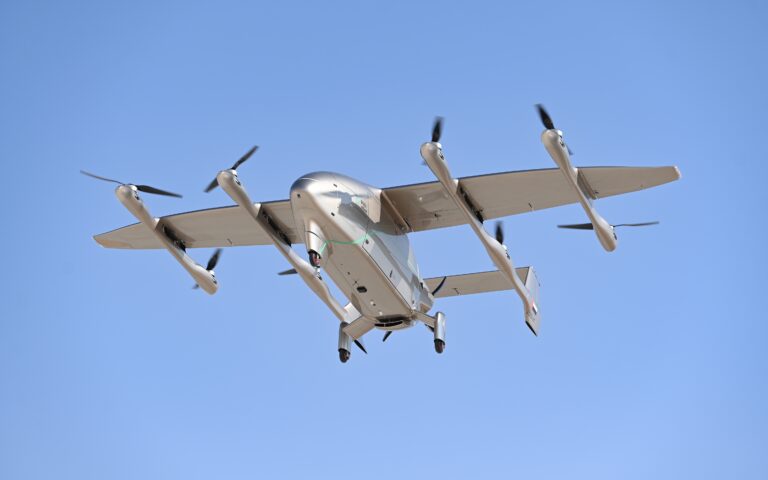
LODD Autonomous has initiated a certification program for its Hili hybrid vertical take-off and landing (VTOL) cargo aircraft with the UAE’s General Civil Aviation Authority (GCAA), marking the transition from development and flight testing into formal certification.
Hili is designed to carry payloads of up to 250 kilograms over distances of up to 700 kilometres, making it one of the longest-range cargo unmanned aerial vehicle (UAV) programmes currently under development in the region. The aircraft is intended to support healthcare, energy, humanitarian and industrial supply chains.
The certification programme will encompass design approval activities, airworthiness compliance demonstrations, ground and flight testing, operational evaluations and safety assessments. It will be conducted under the supervision of the Smart and Autonomous Systems Council, with the GCAA acting as certifying authority throughout the process.
The programme is supported by the Integrated Transport Centre (Abu Dhabi Mobility) and the Abu Dhabi Investment Office (ADIO) through its Smart and Autonomous Vehicles Industry (SAVI) Cluster. Upon certification, Hili is expected to support middle-mile logistics, healthcare supply chains, offshore operations, humanitarian response and regional cargo transportation.
Rashid Al Manai, chief executive officer of LODD, said: “The launch of the Hili certification program marks one of the most significant milestones in the evolution of the aircraft and reflects the progress we have made across design, engineering and flight testing. It brings us one step closer to delivering a UAE-developed supervised autonomous cargo aircraft system capable of transforming how critical goods are moved across the UAE, the region and globally.”
Aqeel Al Zarooni, assistant director general for aviation safety affairs at the GCAA, said: “Advanced aircraft programs such as Hili play an important role in the evolution of aviation and support the safe integration of next-generation technologies into the national aviation ecosystem.”